Publications
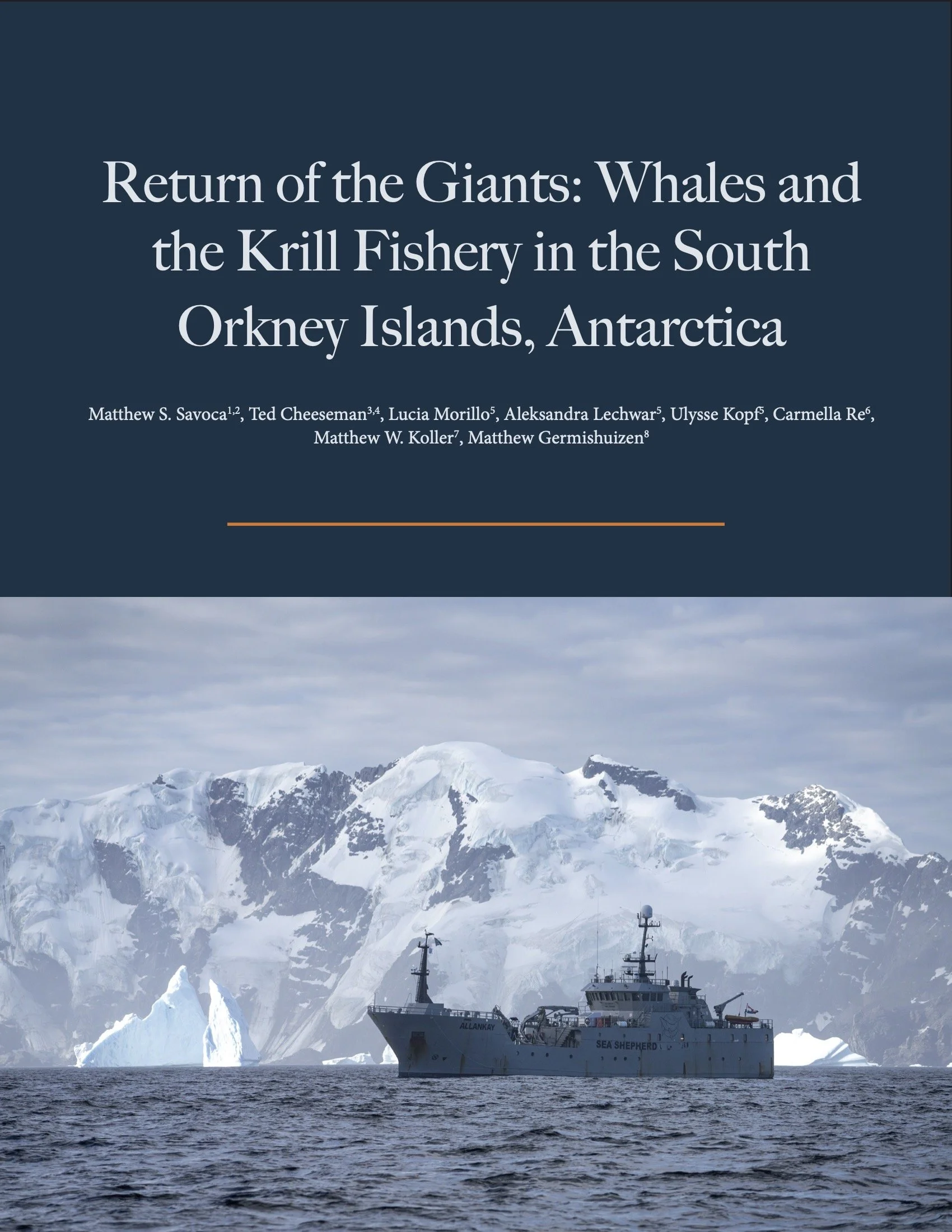
2026 Trip Report
The 2026 South Orkney Islands Expedition Trip Report documents a fisheries-independent scientific survey designed to better understand whale abundance, distribution, and interactions with the Antarctic krill fishery. It summarizes the expedition’s methods and preliminary findings while identifying key research gaps and opportunities to translate this science into stronger protections for the South Orkney ecosystem.
Visual field journal of the 2026 expedition
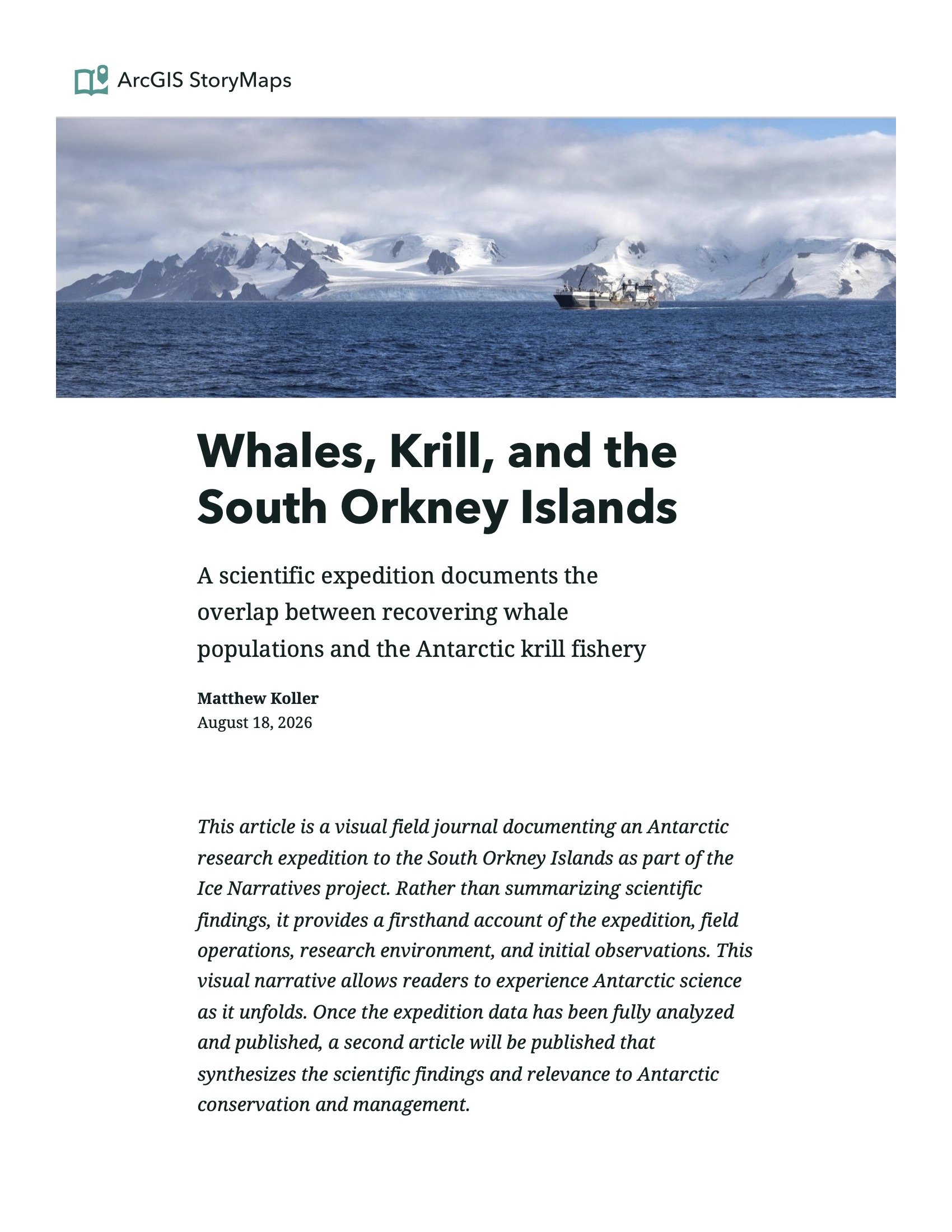
Written by SCAR Ice Narratives Fellow Matt Koller, this article translates the science of the South Orkney Islands expedition for policymakers and broader audiences, exploring the relationship between recovering whale populations, Antarctic krill, and a growing commercial fishery. It combines firsthand observations with emerging research to explain why the region matters and how stronger science can inform the future management and protection of this rapidly changing ecosystem.
Commercial krill fishing within a foraging supergroup of fin whales in the Southern Ocean

Key message:
In January 2022, nearly 1,000 fin whales - the largest gathering of baleen whales ever recorded - were observed feeding alongside four commercial krill fishing vessels near Antarctica’s South Orkney Islands.
This remarkable encounter was eye-opening: as whales return to their historic feeding grounds and the krill fishery expands, both are increasingly converging on the same dense krill swarms causing the potential for conflict over krill.
Whale recovery and the emerging human-wildlife conflict over Antarctic krill
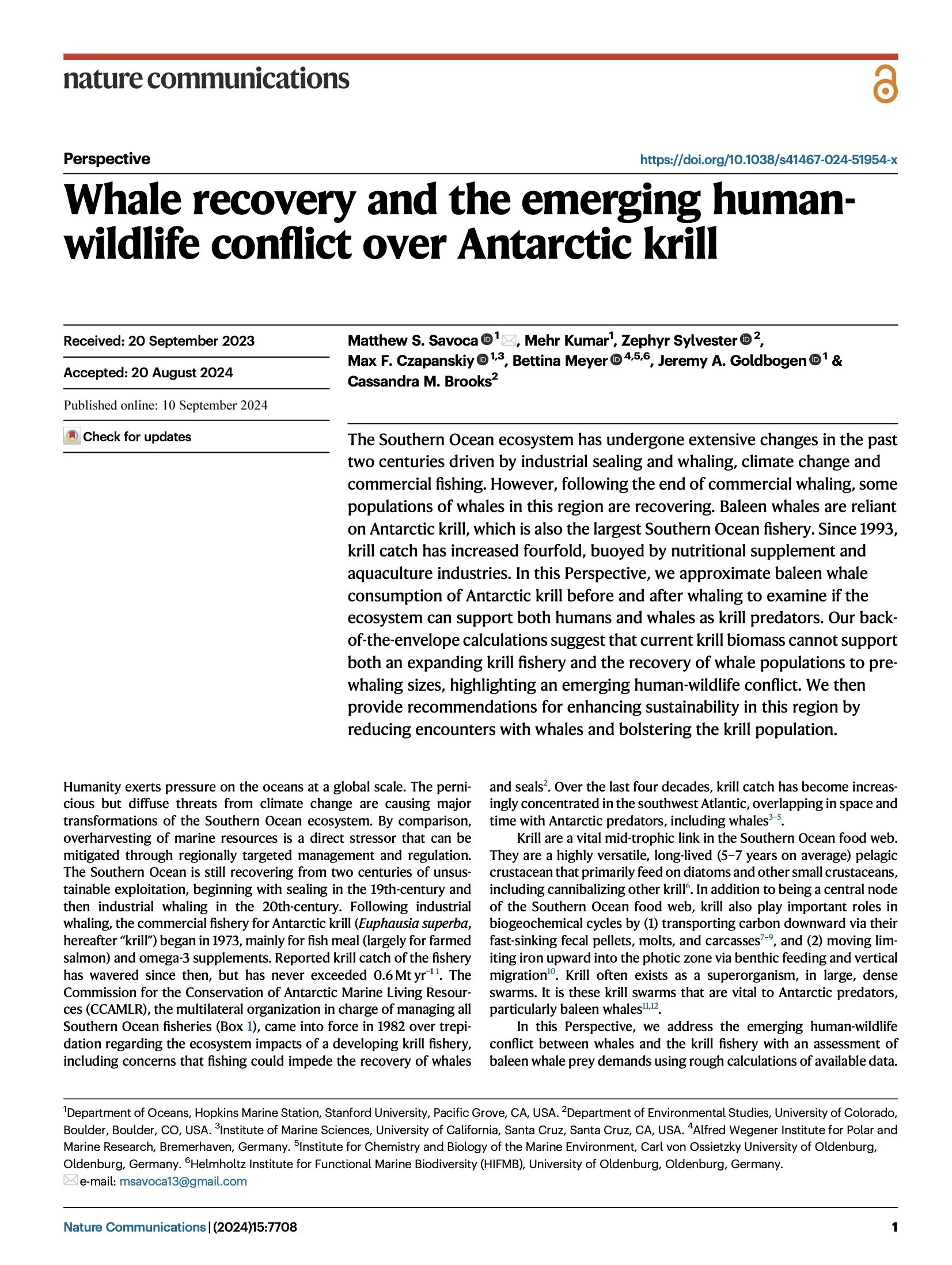
Key message:
Today’s humpback and fin whales may consume roughly 18 million tonnes of Antarctic krill annually in the southwest Atlantic; before industrial whaling, blue, fin, and humpback whales may have consumed about 51 million tonnes.
These estimates are approximate, but the message is clear: as whales recover, their demand for krill will grow while fishing and climate change place increasing pressure on the same resource. Protecting the remarkable recovery of whales will require managing the krill fishery with their future needs in mind.
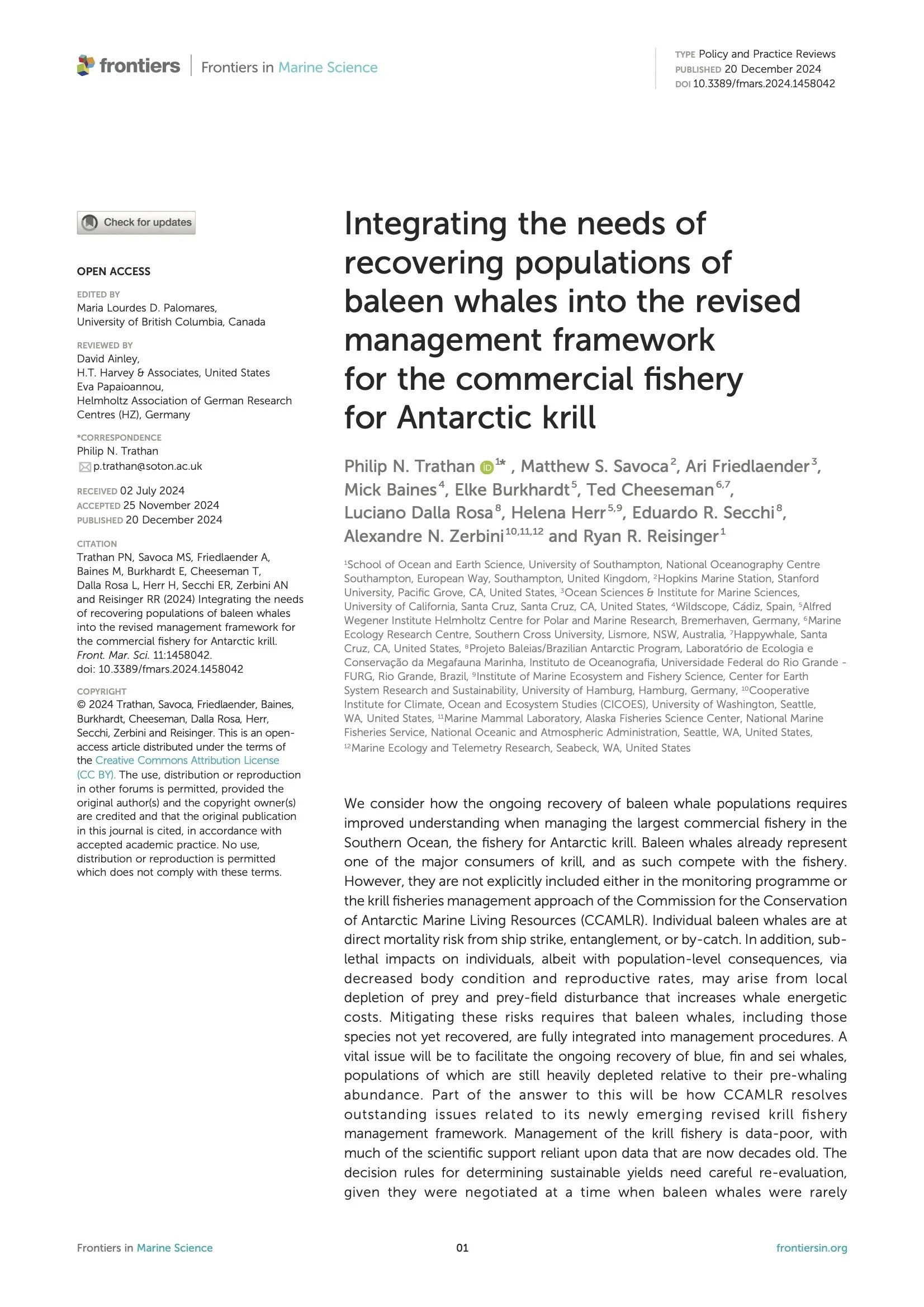
Integrating the needs of recovering populations of baleen whales into the revised management framework for the commercial fishery for Antarctic krill
Key message:
Antarctic krill fishery management was developed when great whales were exceedingly rare, but that is no longer the case. However, their needs as major krill consumers are still not explicitly included in fishery management.
As whale populations continue to recover, krill management must account for the increasing krill demand of future whale populations, not just the needs of whales present today. Updating monitoring, catch limits and protections around important feeding areas is essential to ensure that an expanding fishery does not undermine one of the world’s great conservation successes: the return of Antarctic whales.
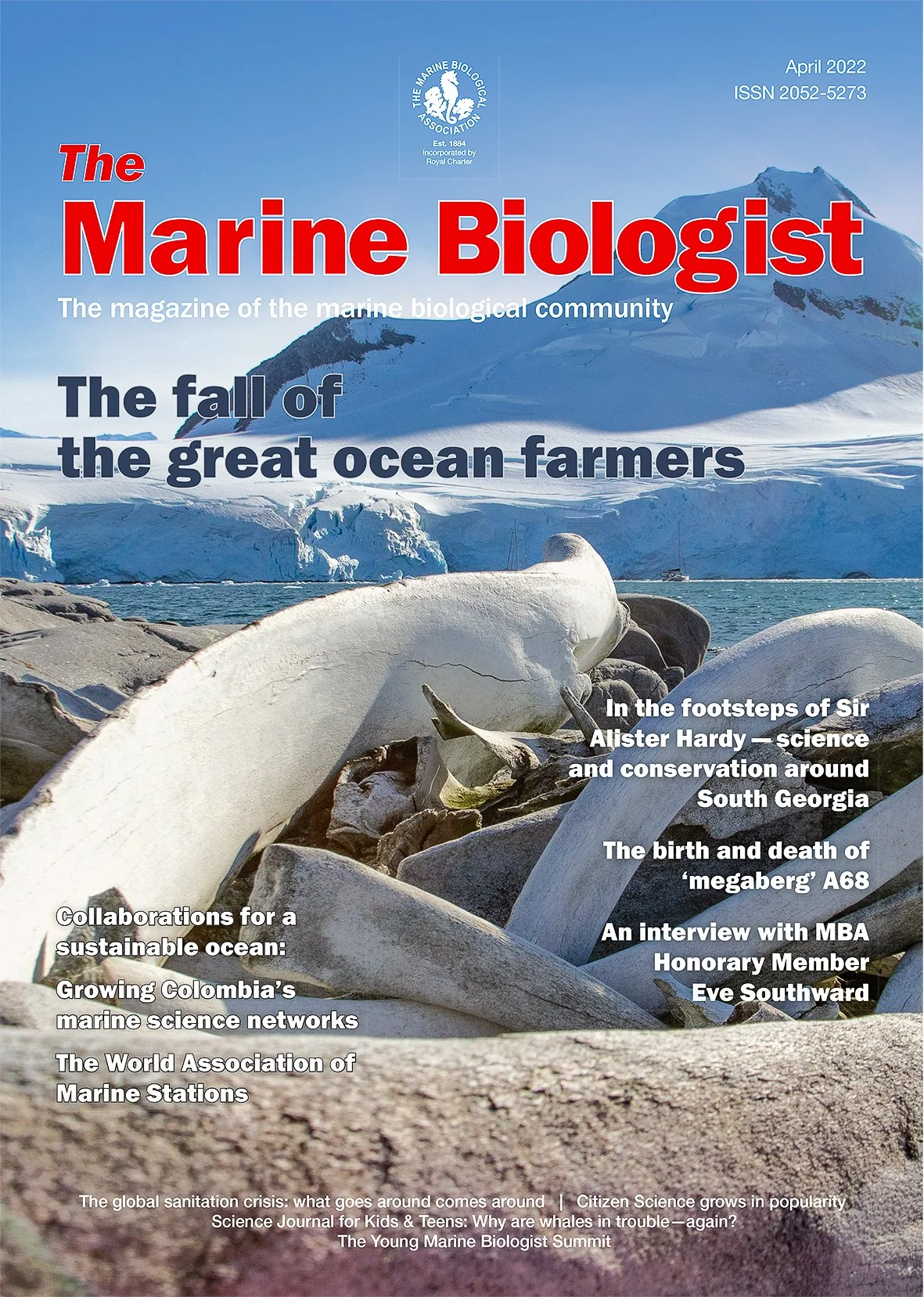
The fall of the great ocean farmers
Key message:
Baleen whales recycle nutrients in their waste, fertilizing the iron-starved Southern Ocean and stimulating the phytoplankton that krill eat. In other words: The krill need the whales as much as the whales need the krill.
Before industrial whaling, this feedback may have helped sustain enormous populations of both whales and krill. Removing more than a million whales may have disrupted the partnership that kept the Southern Ocean booming. Restoring whales could help restore the ecosystem they once helped create.